Romania hits hard in six days.
What makes this trip fun is the mix: Maramures wooden churches plus big-name castles without feeling like a theme-park. I also like that you travel with a professional English-speaking guide and stay in Maramures for two nights in a traditional wooden house. One thing to consider: you’ll cover your own hotels in Sibiu, Sighișoara, and Brașov, since only the Maramures accommodation is included.
I really enjoy how small the group stays (up to 8 people), which keeps the pace flexible. In past trips, guides such as Marius and Andrei showed real passion and were willing to tailor drives and explanations to what I cared about. The only drawback I’d flag is simple: this is a long-distance itinerary with real driving, so you’ll want moderate patience and comfy shoes.
In This Review
- Quick hits before you book
- Day 1: Bucharest to Transylvania via Curtea de Argeș and Sibiu
- Transfăgărășan Highway season: why it affects your whole trip
- Day 2: Alba Iulia’s layered past and Maramures arrives in Breb
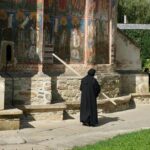
- Day 3: Barsana monastery, wooden church culture, and the Merry Cemetery
- Day 4: Sighișoara’s medieval streets and Vlad Dracula connection
- Day 5: UNESCO fortified churches in Biertan and Viscri, then Brasov’s old center
- Day 6: Bran Castle legend and Peliș Castle’s royal palace power
- Price and value: what you pay vs. what you’ll still need to cover
- Staying in Breb: what the included Maramures nights change
- How much walking and fitness you should plan for
- Who should book this Transylvania and Maramures route
- Should you book 6-Days Transylvania & Wooden Churches of Maramures from Bucharest?
- FAQ
- What time does the tour start?
- Where does the tour end?
- How big is the group?
- Is transportation included?
- Are meals included?
- Are entrance fees included?
- What accommodation is included?
- Is the Transfăgărășan Highway part of the route?
- What if I’m traveling solo?
- What fitness level do I need?
Quick hits before you book
- Small group, up to 8 travelers: feels personal, not crowded.
- English live commentary in the minivan: you’re not stuck guessing during the drive.
- Two Maramures nights included: Breb village stay in a traditional wooden house.
- Wood carver skills at Barsana: you get hands-on context, not just photos.
- UNESCO forts in Biertan and Viscri: fortified-church viewpoints with living village atmosphere.
- Bran Castle + Pelișor-like royal history at Peliș Castle: Dracula legend meets 19th-century palace grandeur.
Day 1: Bucharest to Transylvania via Curtea de Argeș and Sibiu
You start early at Hilton Garden Inn in central Bucharest at 8:00 am, and that sets the tone: this tour is made for people who don’t mind long days with a plan. You head west toward Transylvania, with onboard narration during the drive so the scenery doesn’t pass in silence.
First stop is Curtea de Argeș Monastery, known for its Moorish-style Orthodox church. Even if you’re not deep into architecture, the setting and the church details help you understand why religion and national identity are linked here.
Then you’re facing the big timing question of the day: the Transfăgărășan Highway. It’s only open June–October. If it’s closed (or the weather doesn’t cooperate), the route shifts to the Olt Valley River Road. Either way, you’re aiming to reach Sibiu in the afternoon.
You’ll do a walking tour through Sibiu’s Old Town, including the Big Square and the Small Square. Sibiu is a smart first “home base” feeling in Transylvania because it helps you get your bearings: streets, squares, and fort-town vibes in a compact area.
What to like: the day mixes spiritual Romania, dramatic road travel, and an easy-to-walk historic center.
Potential snag: if you’re someone who gets travel-weary fast, Day 1 can feel like a lot of movement before you even reach Maramures.
You can also read our reviews of more tours and experiences in Bucharest.

Transfăgărășan Highway season: why it affects your whole trip
This is the one logistic detail that changes the feel of Day 1. When Transfăgărășan Road is open (June–October), you’ll get the full effect of that route’s reputation. When it’s closed, you’ll go via the Olt Valley alternative.
Either route still leads you to the same destinations, but the mood can shift. Mountain roads can mean more stops for photos, more guardrail curves, and more “hold onto your hat” moments. The Olt Valley option tends to feel different—more valley travel than high-road spectacle.
The good part is that the tour notes this in advance, and your guide will adapt without drama. So you aren’t stuck imagining what you missed—you’re just using the weather-and-season reality that governs Romania.
Day 2: Alba Iulia’s layered past and Maramures arrives in Breb
After breakfast, you head to Alba Iulia, a place where multiple eras sit close together. The town is tied to Roman history (it protected nearby gold mines after Roman conquest) and it’s also the site associated with Romania’s unification in 1918.
You’ll tour inside the citadel, checking out things like the Orthodox Monastery and key points such as the main gates. Alba Iulia isn’t just “pretty walls.” It’s the kind of stop where you start seeing how Romania’s modern story grew out of older power centers.
After that, you continue to Corvin Castle (the itinerary frames it as one of the most emblematic castles in the region). This is one of those stops where the castle becomes a visual anchor: it bridges what you learned in Alba Iulia with what you’ll keep seeing throughout Transylvania.
Then the trip slows down in the best way: you reach Maramures in Breb village for your included accommodation—a traditional wooden house. This is where the experience changes from “historic sightseeing” to “daily-life Romania.”
What I’d tell you to expect: the first night in a traditional wooden home makes the wooden-church days that follow feel more believable. You’re not learning about the culture from a distance.
One consideration: since Sibiu/Sighișoara/Brașov lodging is not included, your planning budget should handle hotels outside the Maramures nights.
Day 3: Barsana monastery, wooden church culture, and the Merry Cemetery
Maramures is where the tour starts earning its title. You move into the area with a sequence of stops that each explain a different layer of local life.
You begin at Barsana Monastery, one of the important monasteries here. The focus is on local culture and the region’s famous wood carving skills. That matters because later, when you see wooden churches, you’ll understand the craft logic rather than just admiring the results.
Next comes a wood carver visit. The value is that you’re watching the process and learning what the craft actually requires. It’s also one of the best ways to make “wood” feel like a living material instead of decoration.
Then you visit Muzeul Țăranului Român at Dragomirești. This is a traditional house museum with traditional belongings. It’s not included, so you’ll pay there if you want the deeper context.
After that, you stop at a local washing spot described as a whirlpool area where locals used to wash clothes and rugs. The practical takeaway: you’re seeing daily labor in historical form. It’s not glamorous, but it explains why this landscape produced certain traditions and tools.
Finally, you end at the Merry Cemetery, built in 1947. This cemetery is unusual: the guide shares funny stories about people buried there, steering the tone toward humor rather than sadness. This is the kind of stop that can land really well—or feel uncomfortable if you prefer solemn memorials.
What I love about this day: you get both skill (wood carving) and routine (washing, domestic life), then you finish with a cultural twist (the Merry Cemetery).
Potential drawback: it’s a long day of stops, and the cemetery tone isn’t universal.
Day 4: Sighișoara’s medieval streets and Vlad Dracula connection
Today you travel back toward central Transylvania to Sighișoara, a medieval town known for a fairytale look and for being associated with Vlad Dracula’s birthplace.
You’ll take a walking tour of the old center, described as exploring the town’s medieval character. This is one of those places where the streets and hill-town layout do the heavy lifting. The guide helps you read it: which parts were built for defense, how the town organized itself, and why it still feels intact.
Why this stop works: Sighișoara gives you a break from the “church and castle” rhythm of Days 2–3. It’s also a place you can keep exploring at your own pace afterward, if you’ve booked a hotel there (since lodging isn’t included).
Watch-outs: the day’s charm comes with walking, and you should expect cobbled surfaces.

Day 5: UNESCO fortified churches in Biertan and Viscri, then Brasov’s old center
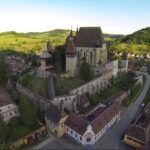
You start the day with Biertan Fortified Church, explicitly noted as a UNESCO Heritage site. It’s a medieval church built on a hill with views over the village. Your guide explains why it’s famous, and you’ll get time inside to connect architecture to history.
From there you go to Viscri, also a UNESCO Heritage site for its fortified church and preserved village atmosphere. The tour notes that Prince Charles bought houses in the village, and you can see why that attention didn’t erase the old rhythm of life. There’s also an optional traditional lunch on your own.
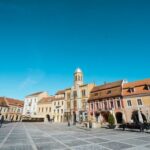
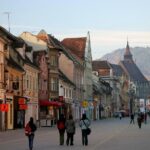
Then you head to Brasov for an afternoon walking tour. You’ll pass the Black Church, see places like Council Square, and walk by the main former gates of the city. It’s a compact way to get oriented in a city that often becomes the last stop before you head back to Bucharest.
What I like here: you get two fortified churches with UNESCO context, then you end in a lively city center where you can extend your evening your way.
What to plan for: entrance fees are not included (and Viscri/Biertan can be part of the paid total), and your Brasov hotel is also not included.
Day 6: Bran Castle legend and Peliș Castle’s royal palace power
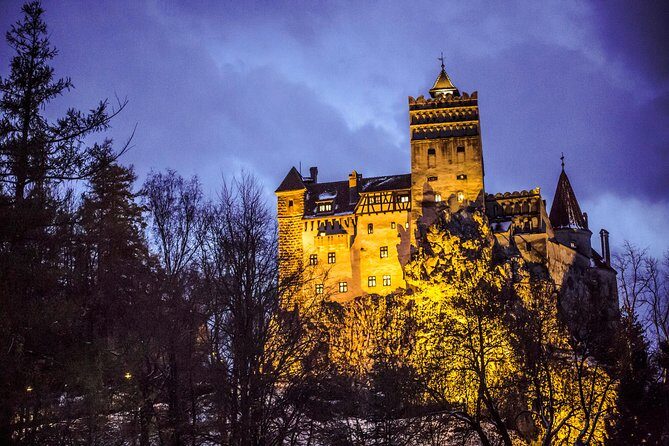
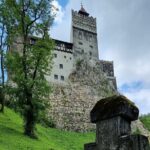
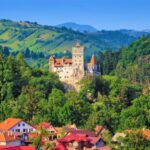
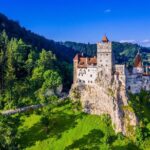
On your last full morning, you visit Bran Castle, known as Dracula’s Castle in popular legend. The itinerary describes it as a 14th-century castle built as a custom point between Transylvania and Wallachia. Your guide takes you inside to separate the legend from what the site itself can tell you.
After, you’ll have time near the front market area for souvenirs. That’s practical: you finish with something tangible to bring home without adding a whole extra shopping stop.
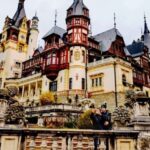
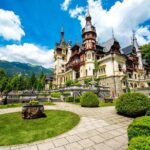
Next you travel through the Carpathian Mountains, passing ski resorts, until you reach Peliș Castle in Sinaia. This palace is described as a magnificent 19th-century residence built for Romania’s first king. You’ll enter and explore with your guide through key rooms and details. It’s often summarized as the Pearl of the Carpathians—and even without that slogan, it makes a solid contrast to Bran’s medieval fortress feel.
Then you head back to Bucharest and finish back at the meeting point.
This is a strong ending: you go from Dracula legend to high-style palace grandeur in the same day, and it gives your trip a satisfying arc.
Price and value: what you pay vs. what you’ll still need to cover
The listed price is $2,247.56 per person for about six days, and that includes a lot of “real costs” that add up on group trips: transport by minivan, fuel surcharge, live commentary, professional English guide, local taxes, and two included dinners plus accommodation in Maramures for two nights.
That said, you should budget for two big non-included items:
- Entrance fees are not included, with the tour estimating 50 euros per person.
- Hotels in Sibiu, Sighișoara, and Brasov are not included.
So the value question isn’t only the headline price. It’s whether you want someone else handling driving and guided stops while you handle your own city lodging and any paid admissions. For many people, that’s a fair trade—especially if you like a structured route through multiple regions.
Also note: the tour says vegetarian option is available if you request it. That can matter more than people expect on multi-day trips.
Staying in Breb: what the included Maramures nights change
The itinerary includes two nights overnight accommodation in Maramures, specifically in Breb village, in a traditional wooden house. That’s more than a bed. It changes how the wooden-church day lands. You’re not just driving in; you’re living for a couple nights inside the rhythm of the region.
It also means two meals are handled for you: the package includes two homemade dinners in a Maramures house. Based on the tour feedback, the dinners tend to feel generous and focused on local flavor, which is exactly what you want here—comfort food after days of walking and driving.
If you’re traveling solo, there’s a single supplement of 100 euros per room for the Maramures region only.
How much walking and fitness you should plan for
The tour asks for moderate physical fitness. Practically, you should plan for a lot of on-foot time in old towns and castle areas, plus cobbles and uneven surfaces in medieval centers like Sighișoara and Brasov.
You don’t need to be an athlete, but do bring shoes that can handle a full day. Your feet will thank you by Day 4.
Who should book this Transylvania and Maramures route
This trip is best for you if you want:
- Castles and fortified churches alongside wood-carving and everyday rural life
- A small group with an English guide and narration during long drives
- A route that covers more than Transylvania alone—Maramures is the cultural heavyweight
It may not be ideal if you dislike driving days, need lots of downtime each evening, or prefer that every hotel night be included.
Should you book 6-Days Transylvania & Wooden Churches of Maramures from Bucharest?
I think you should book if you’re chasing variety with real local texture. You get wooden craftsmanship context in Maramures, two nights in Breb, and then the classic Transylvanian hits—Alba Iulia, fortified UNESCO churches at Biertan and Viscri, plus Bran and Peliș.
Just go in with clear expectations: you’ll pay for entrance fees, you’ll book some city hotels yourself, and you’ll spend a good amount of the trip in the car. If that fits your travel style, this is a strong value way to see a lot of Romania without losing the human story.
FAQ
What time does the tour start?
It starts at 8:00 am from Hilton Garden Inn, Strada Doamnei 12, București.
Where does the tour end?
It ends back at the same meeting point in Bucharest.
How big is the group?
The tour is capped at a maximum of 8 travelers.
Is transportation included?
Yes. You’ll travel by minivan, with live commentary on board.
Are meals included?
The package includes two dinners and breakfast (2) as listed in the inclusions. Vegetarian options are available if you request them when booking.
Are entrance fees included?
No. Entrance fees are not included, with an estimate of 50 euros per person.
What accommodation is included?
Accommodation is included for two nights in Maramures. Overnight stays in Sibiu, Sighișoara, and Brasov are not included.
Is the Transfăgărășan Highway part of the route?
It’s only open June–October. If it’s closed, the tour uses the Olt Valley River Road alternative.
What if I’m traveling solo?
There is a single supplement of 100 euros per room for the Maramures accommodation.
What fitness level do I need?
The tour recommends a moderate physical fitness level.